


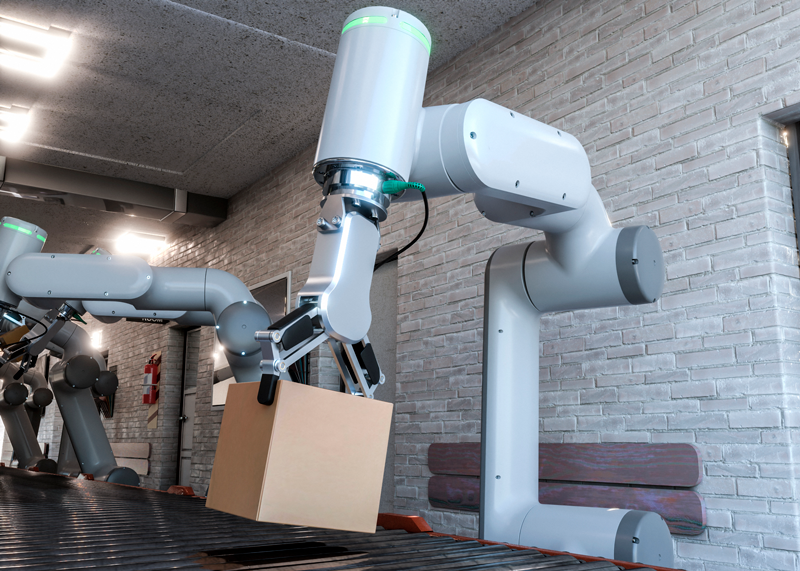
For most people, artificial intelligence lives on a screen. It writes, summarizes, recommends. Physical AI is the branch that leaves the screen: systems that see, move and act in the real world.
A robot that walks a building and compares what it sees with the design is physical AI. So is a camera that notices a missing guardrail, or a machine that adjusts its digging depth from a laser scan. The common thread is perception plus action. The system has to understand space, objects and people, and then do something useful about them.
Construction is one of the hardest places to do this. Sites change every day. Lighting is poor, surfaces are dusty, and no two projects are the same. That is exactly why the industry is now a priority for physical AI research. A model that works on a job site will work almost anywhere.
Three things have changed in the last few years. Sensors such as LiDAR and 360 cameras are cheaper and smaller. Edge computers can run vision models on the equipment itself. And open 3D standards, such as OpenUSD, let BIM models, scans and simulations share one description of the world.
At Emmaty Technologies, this is the base of our Digital Twin platform, Emmaty Site Intelligence. It brings cameras, drones, LiDAR, IoT and BIM into one operational model of the site, so deviations, delays and safety risks show up while there is still time to act.
Physical AI will not build a project on its own. It will make the people who build it see more, earlier.