

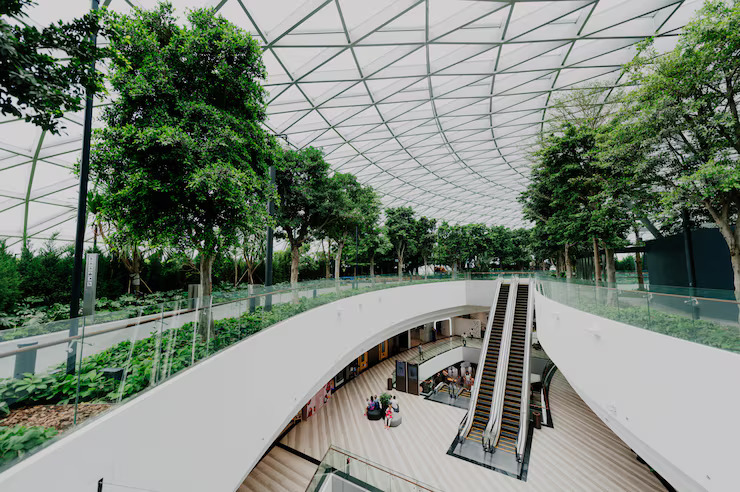
Sustainable architecture has evolved from a niche concept into a fundamental principle of modern building design. Architects and developers increasingly prioritize environmental performance, occupant well-being, and long-term operational efficiency.
Green building design focuses on minimizing environmental impact throughout a structure’s lifecycle. This includes selecting sustainable materials, optimizing energy performance, reducing water consumption, and incorporating renewable energy systems where possible.
Passive design strategies play a crucial role in sustainable architecture. Features such as building orientation, natural ventilation, daylight optimization, and high-performance building envelopes help reduce energy demands while improving occupant comfort.
Certification frameworks such as LEED, BREEAM, and WELL provide guidance for achieving measurable sustainability outcomes. These standards encourage the adoption of best practices and support the development of healthier built environments.
As cities strive to meet ambitious climate goals, sustainable architecture and green building design will continue to shape the future of the built environment. By balancing aesthetics, functionality, and environmental responsibility, architects can create spaces that benefit both people and the planet.